You know the conversation… the one where you said everything, they responded with love, and you somehow walked away less seen than before you opened your mouth.
Maybe nobody was failing anybody. Maybe you were both using the same words… seen, heard, understood, supported… while pointing to different experiences underneath them. That happens more than we notice. This page is the map I spent twenty years needing someone to hand me. Here it is.
The framework… the short version.
Ask five people what it means to feel seen and you may hear five different answers. None of them is necessarily wrong. They may be describing different experiences. That is not a flaw in language. It is part of being human.
Six recurring ways people recognize that they've been seen.
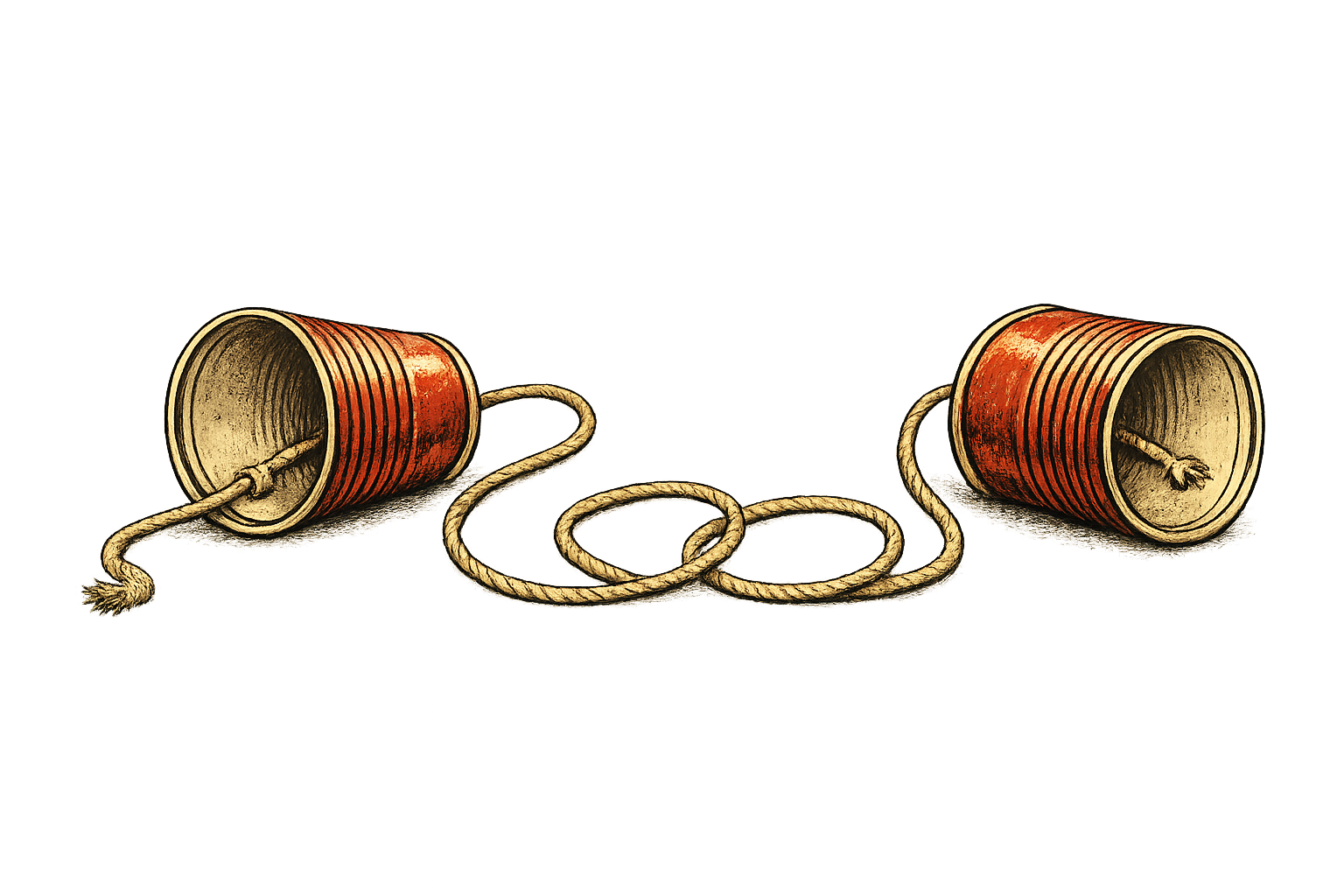
Not how you like affection. Not a personality type. These are recurring signals that tell someone their experience reached another person. Most people seem to lead with one or two, may give through another, and can learn all six.
You can feel loved and still not feel seen.
Love is someone being for you. Seen is someone actually receiving you.
That is the distinction I use in this work. For some people, loved, understood, validated, and seen may overlap almost completely. For others, they do not. Even the words we use to describe connection are not always shared.
And at work? Swap loved for valued. Recognized, paid, promoted… and still invisible in the same week. Same gap. Different building.
not six boxes…
You are not one thing.
Your primary language is where you're loudest… not the only language you can speak.
You can receive through one language, give through another, need something different when you're burning, and learn every one of them with practice.
This is a map of patterns. Not a permanent identity. Not a diagnosis. Not an excuse.
The point isn't to become more attached to a label. It's to become more precise about what reaches you… and more curious about what reaches someone else.
the two people most often confuse…
Mirror
The Mirror needs reciprocal exchange.
"I share… you share… and connection moves in both directions."
Companion
The Companion needs shared territory and solidarity.
"You've been somewhere like this. I'm not alone in the landscape."
Both may use "me too."
The difference is what the "me too" is doing.
For the Mirror, it creates reciprocity.
For the Companion, it creates company.
The Switchboard
Plug into a language… hear what it sounds like.
Tap any jack on mobile… hover or click on desktop. The line will find its port.
pick a line… let's connect you.
pick a line… let's connect you
The six… in plain words.

The Mirror. You feel seen when openness moves in both directions. You share something real and the other person meets you with some of their own… not to redirect, but to become known too. If people are warm and attentive but remain guarded while you keep revealing yourself, you might be a Mirror. [→ more]

The Witness. You feel seen when someone names exactly what's true for you… and doesn't rush past it. Not advice. Not "look on the bright side." Just… "of course you're exhausted, look what you've been carrying." If people jumping in with solutions or their own stories makes you feel invisible mid sentence… you might be a Witness. [→ more]

The Anchor. You feel seen when someone simply stays. No speech needed… they're just there, through the silence and the mess. If flaky people wound you more than they seem to wound others… and steady quiet presence means more to you than any words… you might be an Anchor. [→ more]

The Excavator. You feel seen when someone asks the second question. And the third. When someone's genuinely curious about what it was actually like… not just the headline. If "that sounds hard" ever felt like a door closing… you might be an Excavator. [→ more]

The Keeper. You feel seen when someone remembers. The check in three days later. "How did the thing with your sister go?" If someone forgetting what you told them stings way deeper than it "should"… you might be a Keeper. [→ more]

The Companion. You feel seen when someone joins you in the territory… beside you, not above you or across from you. Shared experience tells you that you're not the only human who has stood here. If thoughtful advice sometimes leaves you feeling as alone as before, you might be a Companion. [→ more]
Recognized yourself in one… or two? Good. That's the map working. Now find out for sure. [→ Take the quiz]
The other two layers.
How you give isn't always how you receive…
Here's what makes this a framework instead of a personality quiz. How you give isn't always how you need to receive… many of us give in the language we are hoping to receive, because modeling feels safer than asking. Two people can care deeply and sincerely believe they are offering what the moment needs… and both still leave feeling missed. Sometimes nobody is withholding. The people involved may simply be offering what would have reached them.
And one more layer… capacity.
Knowing someone's language gives you a clearer clue about what may help them feel seen. It doesn't tell you whether the people around them can give it right now. That's capacity. The better question may be: Is this a won't or a can't… and what, if anything, could help rebuild capacity? The full capacity work runs through everything I do in rooms.
The research underneath…
The research and adjacent ideas that inform the questions beneath the framework… with sources and clear boundaries. [→ Research]
🐿️ Ready to find yours? Five minutes… no email wall.
→ Take the QuizThis framework is a living document… twenty plus years of seeking, six, seven of building, and still growing… like its author.